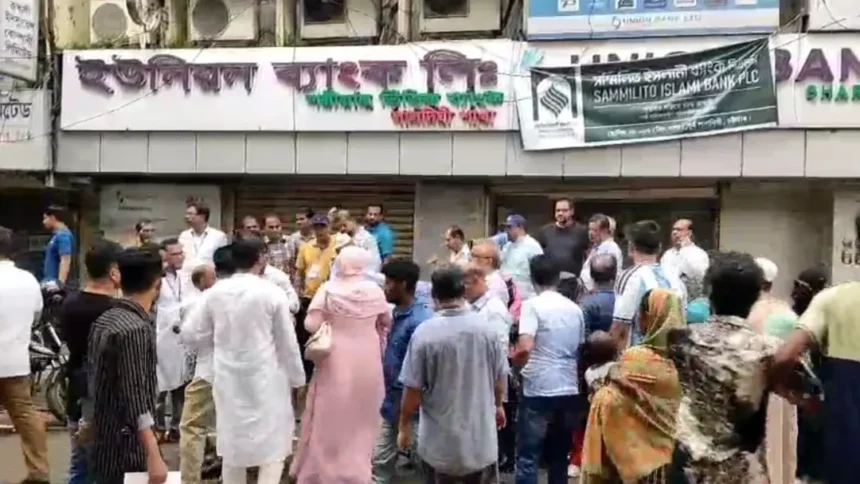
Depositors of the newly formed Sammilito (Combined) Islami Bank staged demonstrations in Chattogram on Sunday, demanding the formal cancellation of the “haircut” policy, the restoration of normal banking transactions, and the full security of their savings.
The protests took place in the city’s Laldighi and Andarkilla areas, where agitated customers gathered in front of various branches of the combined entity—an institution formed through the merger of five troubled banks: First Security Islami Bank, Global Islami Bank, Union Bank, EXIM Bank, and Social Islami Bank.
Key Demands of the Protesters
During the sit-in programs, demonstrators voiced their grievances regarding the prolonged inability to withdraw their principal amounts or accrued profits. Their primary demands include:
-
Formal Gazette: The immediate issuance of a government gazette formally cancelling the “haircut” policy—a decision that previously reduced the value of deposits by cutting accrued profits.
-
Full Security: Guarantees ensuring 100% safety of their deposits and the elimination of ongoing customer harassment.
-
Normal Banking Operations: The full restoration of standard banking services, which have been severely restricted due to the liquidity crisis within the merged entity.
Context of the Dispute
Sharmeen Akter, vice-president of the Sammilito Islami Bank Victim Depositors’ Association (Chattogram unit), stated that while Finance Minister Amir Khasru Mahmud Chowdhury announced in Parliament on July 8 that depositors would receive their money back with interest and that there would be no “haircut,” depositors are still waiting for a formal written notification.
“We welcome the Finance Minister’s decision, but we demand an official gazette to make it binding,” Akter said. She further expressed frustration over current profit rates offered by the bank, which she described as discriminatorily low (approximately 4.5% to 5%) compared to the 9.5% to 10% rates available at other scheduled banks.
Bank Authority Response
During the protests, bank officials attempted to pacify the customers, assuring them that the institution is not in favor of maintaining the “haircut” and that necessary steps are being expedited to protect the interests of the public and ensure the safety of their deposits.
The merger of the five banks was part of a major regulatory intervention by Bangladesh Bank to address prolonged liquidity pressures, weak governance, and rising non-performing loans within these Shariah-compliant lenders. Despite these efforts, many depositors remain deeply concerned about the accessibility of their life savings.
Protesters have vowed to continue their movement until their demands for the official cancellation of the haircut policy and the restoration of normal financial services are fully met.