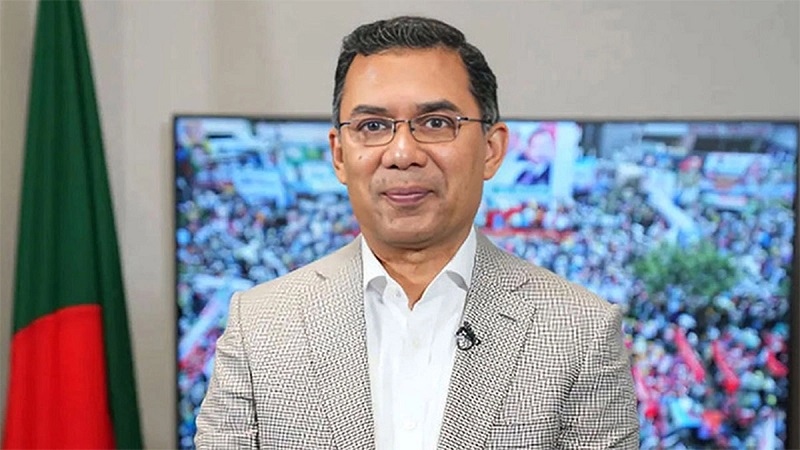
Tarique Rahman, acting chairman of the Bangladesh Nationalist Party (BNP) and son of former President Ziaur Rahman and three-time Prime Minister Khaleda Zia, remains one of the most influential and debated figures in Bangladesh’s political landscape.
Although living in exile in London for over a decade, Rahman has continued to lead his party digitally, guiding BNP’s organizational activities, political campaigns, and democratic movements from abroad. Analysts say his leadership has shaped key opposition strategies in recent years, including reform proposals and calls for fair elections.
Rahman first rose to prominence during the 2001 national elections when he played a central role in BNP’s campaign, which led to a landslide victory for the party. He was later appointed senior joint secretary general of BNP in 2002, consolidating his position within the party.
However, his political journey has also faced major challenges. Following the 2007 military-backed caretaker government’s emergency rule, Rahman was arrested and reportedly subjected to custodial torture, according to rights groups such as Human Rights Watch and Amnesty International. Since then, he has remained in London, citing medical needs and political restrictions.
From exile, Rahman introduced a 31-point reform blueprint in 2022, which emphasized good governance, judicial independence, decentralization, and anti-corruption measures. International think tanks, including India’s Observer Research Foundation and Pakistan’s Jinnah Institute, described it as a significant proposal for democratic reform in South Asia.
In 2024, during the student-led uprising that turned into a nationwide anti-government movement, BNP leaders credited Rahman with providing strategic guidance from abroad. International media outlets including Al Jazeera, The Economist, and The New York Times noted his role in directing opposition momentum.
Despite controversies and criticism from political rivals, supporters view him as the future leader of BNP and a potential prime ministerial candidate. Political observers argue that his leadership style—marked by digital engagement, reform-oriented policy outlines, and a focus on democratic governance—will continue to shape Bangladesh’s political discourse.