Prime Minister and Bangladesh Nationalist Party (BNP) Chairman Tarique Rahman has called for collective national efforts and unity to build a country that fulfills the long-held aspirations of its people.
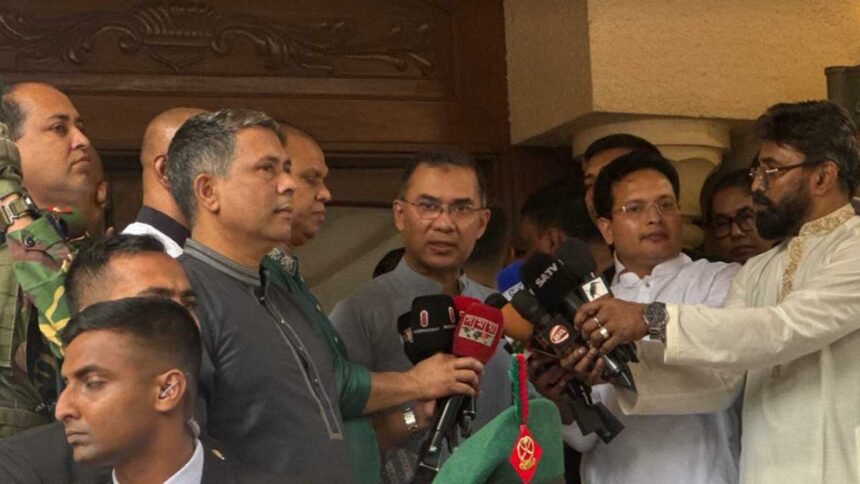
The Prime Minister made these remarks on Saturday morning while exchanging Eid-ul-Fitr greetings with people from all walks of life at the State Guest House Jamuna, his official residence.
Key Highlights of the Prime Minister’s Address:
-
A Prayer for the Nation: Speaking to journalists after the ceremony, the Prime Minister shared his vision for the future. “On this Eid, I pray to Almighty Allah that we can build the Bangladesh that the people desire,” he stated.
-
Commitment to Progress: He emphasized that the current government is steadfast in its mission to serve the public interest. “The government will work to build the country exactly as the people want to see it,” he added.
-
Honoring the Martyrs: In a poignant moment, the Premier paid deep tribute to those who sacrificed their lives for the nation. He specifically honored the martyrs of the 1971 Liberation War and the 2024 student-led mass uprising, noting that their sacrifices paved the way for the restoration of democracy.
-
Call for Unity: Rahman urged everyone, regardless of political affiliation or personal opinions, to work together. He sought the cooperation of all citizens to achieve the goal of a prosperous and inclusive nation.
Significance of the Event
This celebration marks a historic moment for the Prime Minister, as it is his first Eid celebrated in Bangladesh in 18 years, following a long period of exile in London. The event at Jamuna saw a large turnout, including foreign diplomats, cabinet members, senior officials, and members of the general public, creating a festive and optimistic atmosphere.
Earlier in the day, the Prime Minister offered his Eid-ul-Fitr prayers at the National Eidgah alongside President Mohammed Shahabuddin, before visiting the graves of his parents, the late President Ziaur Rahman and former Prime Minister Khaleda Zia, to offer prayers for their departed souls.