Islamophobia and anti-Muslim sentiment have long been present in India. In today’s digital era, social media platforms such as Facebook and YouTube have become major tools for spreading communal hatred. Now, a new dimension has been added — vested interest groups across India are reportedly using Artificial Intelligence (AI) to amplify Islamophobia more effectively.
According to a new research report by the Washington-based think tank Center for the Study of Organized Hate (CSOH), AI has emerged as a powerful weapon for anti-minority propaganda.
On September 29, the nonpartisan research organization published a 60-page report on its website titled “AI-Generated Imagery and the New Frontier of Islamophobia in India.”
The report revealed that between January 2024 and April 2025, a total of 1,326 AI-generated hate posts targeting Muslims in India were identified. These posts originated from 297 public accounts active on X (formerly Twitter), Instagram, and Facebook.
CSOH founder and executive director Raqib Hamid stated that this limited research data represents “only the tip of the iceberg,” adding that the actual scale of digital hate content in India is far greater.
The report noted that such activities were relatively lower in 2023 but saw a sharp rise by mid-2024 — coinciding with the growing accessibility of AI tools like Stable Diffusion, Midjourney, and DALL·E to the general public.
According to CSOH, AI-generated images are being used to dehumanize Muslims, spread conspiracy theories, glamorize violence, and fuel misogyny and hatred against Islam.
The report has sparked widespread debate in India, as it highlights how AI is accelerating the spread of communal propaganda. It also warns of a rising trend of AI-generated sexually exploitative images and content targeting Muslim women.
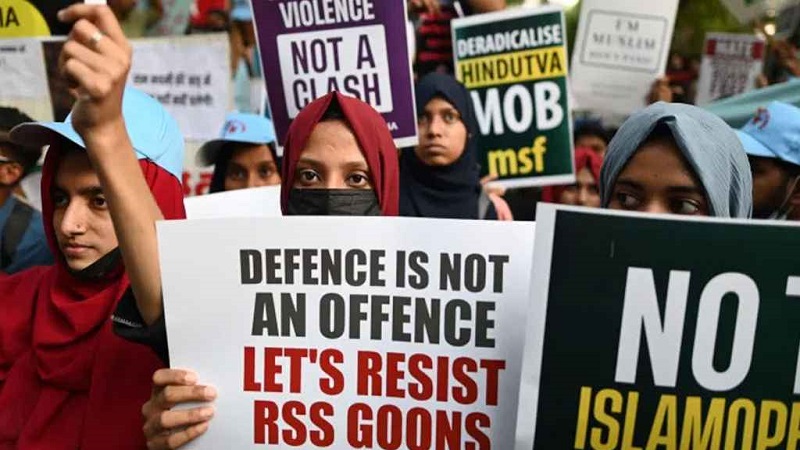
The report’s release coincided with the “I Love Muhammad” movement, which gained momentum in September across India. The movement began in Kanpur, northern India, and spread nationwide. Tensions escalated when a right-wing Hindu group objected to the campaign. Subsequently, police across several states filed cases against thousands of Muslims for “unlawful gatherings,” though organizers insisted the events were peaceful religious assemblies.
CSOH further observed that in today’s India, even minor protests or local disputes are often reframed as communal conflicts, particularly by those seeking to spread hatred. In such contexts, AI-generated images and videos are easily weaponized.
The report concludes with nine key recommendations, directed toward both policymakers and AI developers. It calls for the immediate and sustained implementation of robust detection, reporting, and control mechanisms to identify and curb AI misuse in real time.