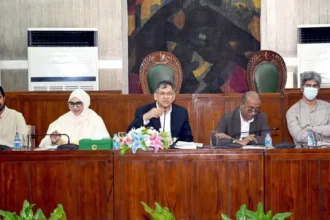
Tensions between the central bank and the government reached a boiling point on Monday as officials of Bangladesh Bank (BB) demanded the immediate resignation of Finance Adviser Dr. Salehuddin Ahmed. The protest erupted following the Ministry of Finance’s decision to reject a proposed amendment aimed at granting the central bank greater functional autonomy.
The demonstration, organized by the Bangladesh Bank Officers’ Welfare Council, took place in front of the bank’s main building. Protesters accused the Finance Adviser of “double standards,” noting that while he championed central bank independence during his own tenure as Governor (2005–2009), he has now blocked the very reforms he once supported.
The Core of the Dispute: The “Bangladesh Bank Order”
In early October 2024, the central bank sent a formal proposal to the Ministry of Finance to amend the Bangladesh Bank Order, 1972. The goal was to consolidate the bank’s legal framework and ensure it could operate without political interference—a key recommendation often echoed by international bodies like the IMF.
According to the protesters, the Finance Adviser summarily rejected the proposal without a formal review process.
“A proposal to amend the Bangladesh Bank Order was sent to the ministry on October 9. It was canceled without any due process,” said A.K.M. Masum Billah, President of the Officers’ Welfare Council. “We are demanding his resignation because of this contradictory stance. We want it even if he is in office for just one more day.”
Frustration Over “Invisible Progress”
Despite the interim government’s broader agenda for structural reform, central bank staff expressed deep resentment over the lack of movement on institutional independence.
Golam Mostafa Srabon, General Secretary of the council, highlighted the following grievances:
-
Lack of Progress: No visible steps have been taken to strengthen the central bank’s legal authority despite multiple memorandums submitted to the Finance Adviser.
-
Institutional Weakness: Officials argue that a capable and independent central bank is “indispensable” for restoring discipline and good governance in the financial sector.
-
Widespread Resentment: The rejection of the amendment ordinance has caused “deep frustration and anger” across all levels of the bank’s workforce.
Political Context and Next Steps
The protest comes at a sensitive time as the country approaches national elections. Council leaders pointed out that the two leading political parties have already included central bank autonomy in their election manifestos.
“We want whichever party forms the next government to implement central bank autonomy immediately,” Billah added.
The Officers’ Welfare Council has announced that they will hold discussions with officials from all levels following the February 12 elections to decide on a further course of action if their demands are not met