Taskeen Ahmed, President of the Dhaka Chamber of Commerce and Industry (DCCI), revealed on Monday that private sector credit growth in Bangladesh has plummeted to 6.3%, marking the lowest level in 22 years.
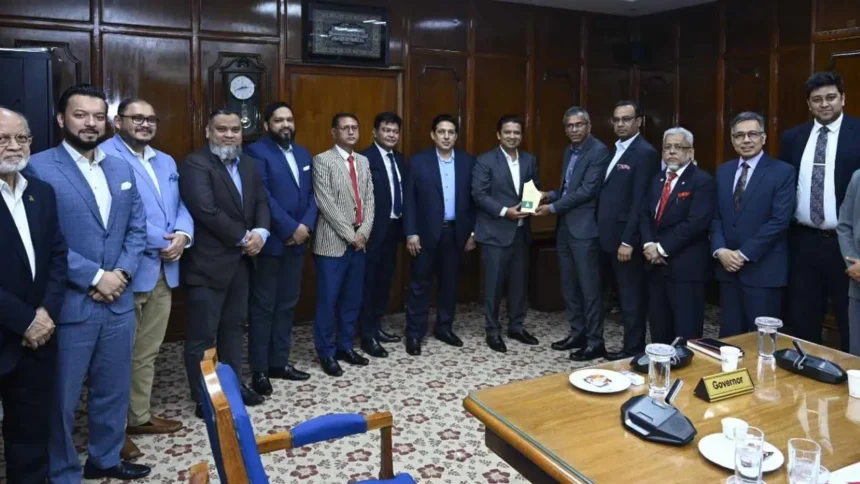
During a courtesy meeting with Bangladesh Bank Governor Md. Mostakur Rahman at his office, the DCCI chief highlighted the severe liquidity crisis and the escalating cost of doing business, which is stifling investment and industrial productivity.
The Burden of High Interest Rates
The DCCI President pointed out that the current 10% policy rate has pushed commercial lending rates to a staggering 16–17%. This spike has made bank financing nearly impossible for many businesses, particularly Cottage, Small, and Medium Enterprises (CSMEs).
“The current situation reflects a deep liquidity crisis in the banking system,” Ahmed stated. “Financing is becoming prohibitively expensive and, in many cases, ineffective for low-margin manufacturing industries.”
To revive economic activity, the DCCI proposed:
-
Gradual reduction of the policy interest rate.
-
Targeted subsidized credit facilities for priority sectors such as exports, manufacturing, and SMEs.
-
Reduction of the interest rate spread, which currently exceeds 5%, eroding investor confidence.
Calls for Policy Flexibility and Governance
Ahmed expressed concern over the recent tightening of loan classification rules—where the grace period was reduced from nine months to three months. Coupled with high energy costs and low market demand, this has placed immense pressure on businesses.
The DCCI urged the central bank to:
-
Increase the loan classification period to at least six months.
-
Offer re-scheduling facilities for “unintentional” defaulters to help them recover.
-
Ensure stronger governance within the banking and financial sectors to restore investor trust.
Central Bank’s Strategic Pivot
In response, Governor Md. Mostakur Rahman acknowledged that the economy’s heavy reliance on a few specific products and export markets is a vulnerability. He emphasized that the only way forward is to expand domestic economic activities.
The Governor’s key focuses include:
-
Prioritizing CSMEs and Agriculture: Strengthening these sectors is seen as vital for local economic momentum and job creation.
-
Addressing Logistics Costs: The Governor noted that high logistics and supply chain costs are significant drivers of persistent inflation.
-
Policy Reforms: He admitted that unsatisfactory GDP growth has hindered both foreign and local investment, necessitating urgent reforms to reduce the “cost of doing business.”
The meeting was attended by DCCI Senior Vice President Rajib H. Chowdhury, Vice President Md. Salim Solaiman, and senior officials from both the DCCI and Bangladesh Bank.