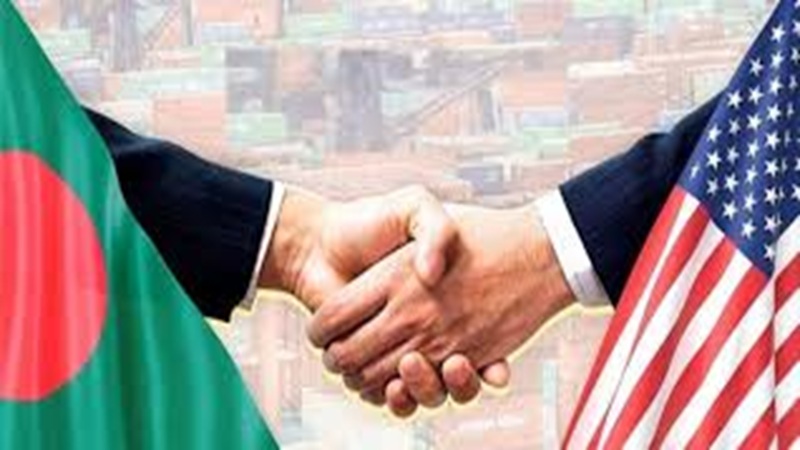
Bangladesh and the United States have officially signed a historic Agreement on Reciprocal Trade (ART), marking a transformative shift in bilateral economic relations. The pact, signed late Monday (February 9, 2026), reduces the reciprocal tariff on Bangladeshi exports to 19% and offers a strategic “duty-free” window for the country’s apparel sector.
The agreement was signed in Washington D.C. at approximately 10:00 PM (Bangladesh Time) by Bangladesh’s Commerce Adviser Sk. Bashir Uddin and Representative Jamieson Greer. National Security Adviser Khalilur Rahman also joined the signing ceremony as the chief negotiator for the Bangladesh side.
Strategic Relief for Exporters
The new 19% reciprocal tariff replaces the previous 20% rate. This is the culmination of a nine-month negotiation process that began after the U.S. initially proposed a 37% tariff in early 2025.
With the existing base tariff of roughly 15% combined with the new 19% reciprocal rate, the total duty on most Bangladeshi products now stands at 34%.
The “Zero-Duty” Breakthrough for RMG
The centerpiece of the deal for the Ready-Made Garment (RMG) sector is a new mechanism allowing garments produced with U.S.-sourced cotton and synthetic fibers to enter the American market with zero reciprocal tariffs.
“This is a massive achievement for our garment sector, which accounts for 86% of our exports,” stated Commerce Adviser Sk. Bashir Uddin. “By utilizing U.S. raw materials, our manufacturers can effectively bypass the reciprocal tariff, making our products significantly more competitive.”
Bangladesh currently produces only 2% of its required cotton, importing the remaining 98%. The agreement incentivizes a shift toward U.S. cotton, which sector leaders like BGMEA Director Faisal Samad describe as a high-quality input that will enhance the brand value of “Made in Bangladesh” apparel.
Regional Competitiveness
The deal places Bangladesh on equal footing with regional competitors. According to the new tariff schedules:
-
Bangladesh & Pakistan: 19%
-
India: 18% (recently reduced from 25%)
-
Vietnam: 20%
-
China: 47% (remains under high pressure)
Broader Economic Commitments
In exchange for tariff concessions, Bangladesh has committed to opening its market to U.S. goods and aligning with international standards. Key components include:
-
Procurement: Bangladesh will purchase 14 Boeing aircraft for Biman Bangladesh Airlines.
-
Energy & Agriculture: Commitments to import $15 billion in U.S. energy products over 15 years and $3.5 billion in agricultural products (wheat, soy, corn).
-
Regulatory Alignment: Bangladesh will recognize U.S. FDA certifications for pharmaceuticals and medical devices and accept U.S. safety standards for vehicles and machinery.
R.N. Paul, Managing Director of RFL Group, noted that while the 1% reduction is a positive signal, the real victory lies in the geopolitical recognition of Bangladesh as a priority trade partner in South Asia.