Artificial Intelligence (AI) could increase the value of global trade in goods and services by nearly 40% by 2040, primarily through reducing trade costs, increasing productivity, and expanding participation in the world market.
This groundbreaking information was revealed in a new report published on Wednesday by the World Trade Organization (WTO), titled ‘Working on Trade and AI for Everyone’s Benefit’.
The report further suggests that the development and application of AI will lead to significant growth in global GDP, projecting an increase of 12 to 13% under various scenarios.
WTO Director-General Highlights AI’s Transformative Power
Speaking at the report launch event in Geneva, Switzerland, WTO Director-General Ngozi Okonjo-Iweala emphasized the rapid and profound impact of AI. “AI is already reshaping our economies and our societies. It has the capacity to transform how we produce, consume, and trade,” she stated.
The Director-General highlighted AI’s crucial contribution to trade growth by lowering trade costs and reorganizing the production of goods and services. WTO simulations indicate that by 2040, AI could increase exports of goods and services by approximately 40% compared to current trends. A key finding from their research is that the private sector is already seeing tangible trade-related benefits from AI usage.
“Nearly 90% of firms using AI have improved efficiency in managing trade risks or complying with procedures,” she noted.
Bridging the Digital Divide is Crucial
However, the benefits derived from AI will not be automatically or widely shared across economies, Okonjo-Iweala cautioned.
“Our simulations show that with current trends in digital infrastructure and AI adoption, lower-income economies will see around 8% growth from AI, while high-income countries will achieve double-digit growth.”
Crucially, the report shows that closing the digital and AI divide could nearly double the GDP of lower-income economies to 15%, without significantly altering the growth potential in high-income economies. “In other words, inclusive and equitable gains are possible—but they require action,” she asserted.
Global Trade Projections and Challenges
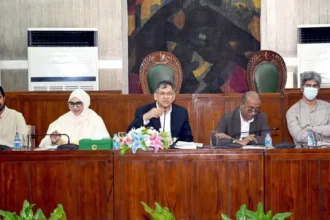
Prior to the official release, a press briefing featured WTO Deputy Director-General Johanna Hill and report coordinators Marc Bacchetta, Emmanuelle Ganne, and Ankai Xu, who outlined the report’s key features.
Deputy Director-General Hill noted that trade policy uncertainty is one of the most disruptive forces in the global trading environment, stressing the importance of WTO members continuing to respond to the trade system under the organization’s rules. She added that the trade landscape is changing rapidly, with geopolitics and geo-economics dominating the headlines, and AI being one of the major trends reshaping the future of the world economy and international trade.
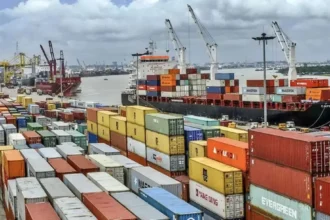
According to the report, AI-driven growth in global trade is projected to range from 34% to 37% by 2040 across different scenarios, which are based on “varying degrees of policy and technological exposure between low- and high-income economies.” Trade can also help economies access AI-enabled goods, such as raw materials, semiconductors, and other intermediate supplies. Global trade in these products reached a total of $2.3 trillion in 2023.
Policy Recommendations for Inclusive Growth
To ensure AI and trade contribute to inclusive growth, the WTO report calls for policies that address the digital divide, invest in worker skills, and maintain an open and predictable trade environment.
The report emphasizes that the impact of AI on inclusive growth will depend on the design of trade and trade-related policies. The policy challenges associated with AI in trade are wide-ranging, and complementary policies in areas such as infrastructure, energy, education, and government support are vital. This necessitates close cooperation between the WTO and other international organizations to support greater global participation in an AI-driven economy.