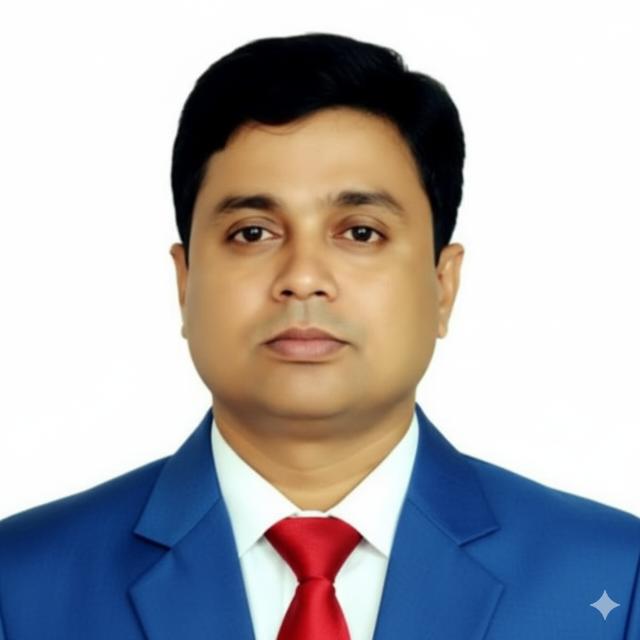
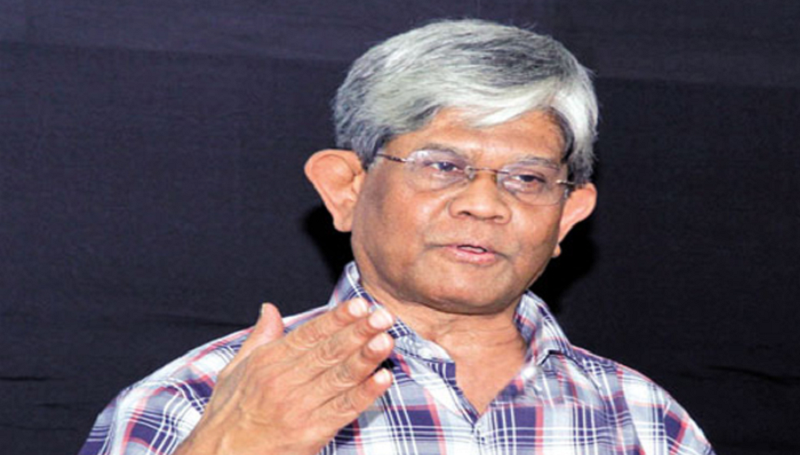
Dr. Salehuddin Ahmed, the Finance Advisor, expressed hope today that a portion of the money smuggled out of the country could be repatriated by next February. However, he declined to specify the exact amount expected to be returned.
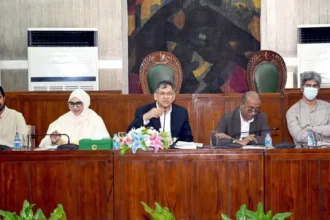
Dr. Ahmed made the remarks while responding to journalists’ questions following a meeting of the government’s Procurement Advisory Committee at the Secretariat.
Progress in Repatriation
When asked whether the smuggled funds could indeed be brought back by February, the Finance Advisor acknowledged the complexity of the issue, stating that those involved in money laundering are knowledgeable about the processes. “It will take some time to bring this back,” he said.
He confirmed that “some progress” has been made and that discussions are ongoing with several legal firms. “Perhaps some [money] may arrive by February. We are preparing for the rest,” he added.
Dr. Ahmed emphasized that the necessary legal formalities are unavoidable and must be followed. “This formality cannot be avoided by any government,” he explained, noting that simply telling the central bank or the Swiss bank to hand over the money would not work. “You have to go the legal route, which we are already…”
He further revealed that the government is focusing on 11-12 high-priority cases, in addition to targeting others involving amounts exceeding BDT 200 crore.
Continuity of Efforts and International Practice
Addressing a question about whether a new government would maintain the current trajectory, Dr. Ahmed stressed that they would be “obligated” to do so.
“If they do not continue the processes we have initiated, the money won’t return,” he asserted. “If they want to bring it back, they must maintain these processes. This is international practice. How else will they bring it back?”
When pressed on the volume of funds expected to be returned, the Finance Advisor directed the journalists to ask the Governor of the Bangladesh Bank.
Ongoing Smuggling and Asset Freezing
Regarding allegations of recent money laundering, Dr. Ahmed said the Bangladesh Bank would provide a “comprehensive explanation” after a review is completed in “a few days.”
He confirmed that authorities already possess information on the culprits, including where their money and accounts are located, and in which countries they hold passports. “You know, assets have already been frozen in several foreign countries,” he stated. “Now, it’s just a matter of the time it takes to complete the remaining work.”
Allocation of Funds and Nutritional Security
Dr. Ahmed dismissed a journalist’s accusation that more funds were being allocated to advisory areas, saying, “No, no. The projects were undertaken a long time ago.”
When questioned about a Bangladesh Bureau of Statistics (BBS) report indicating that three out of ten families in the country suffer from malnutrition or food insecurity, the Finance Advisor acknowledged the challenge.
“We have some nutritional deficits, especially among children and mothers,” he admitted. He mentioned government initiatives such as VGF (Vulnerable Group Feeding) programs and special truck distributions. He cited the recent closure of fishing for a period, during which fishermen are provided with 20 kg of food. “We are trying,” he affirmed.
Dr. Ahmed pointed out that the national diet often lacks balance, with an over-reliance on rice. He noted that other necessary food items, such as those rich in protein like eggs, are less accessible due to their higher cost. “They are expensive. This is why we have a food deficit, we need some protein,” he concluded.