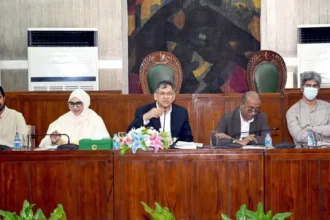
All eyes are on the National Parliament this afternoon as Finance Minister Amir Khosru Mahmud Chowdhury presents the first budget of the current administration’s tenure. Marking the 55th national budget of Bangladesh, the proposed Tk 9.38 lakh crore fiscal plan represents a massive expansion of the state’s financial footprint.
The session will be held under the chairmanship of Speaker Dr. Hafiz Uddin Ahmed and in the presence of Prime Minister Tarique Rahman, signaling a major political milestone for the government as it lays down its economic vision for the country.
Revenue and Governance Challenges
The government’s budget relies on generating Tk 6.95 lakh crore in internal and external revenue. The ultimate success of this political vision rests on the shoulders of the National Board of Revenue (NBR), which has been handed a historic collection target of Tk 6.04 lakh crore.
To meet this goal, the administration is focusing heavily on structural efficiency. Achieving an additional Tk 71,000 crore on top of the current fiscal’s revised target requires more than just high projections; it demands structural reforms in tax administration, an aggressive expansion of the tax net into previously untapped sectors, and airtight measures against institutional tax evasion.
Managing Public Debt
The administration is also balancing a complex political equation regarding public debt. With a spending-to-earning gap of Tk 2.43 lakh crore, the government is implementing a dual financing strategy:
-
Tk 1.16 lakh crore will come through international diplomacy via foreign loans and grants.
-
Tk 1.27 lakh crore will be sourced from domestic reserves, primarily relying on a Tk 1.12 lakh crore borrowing plan from local banks.
As the Finance Minister reads out the fine print of the budget this afternoon, the document will serve as a critical report card for the current government’s capacity to manage inflation, maintain public expenditure, and drive economic growth moving into the new fiscal year starting July 1.