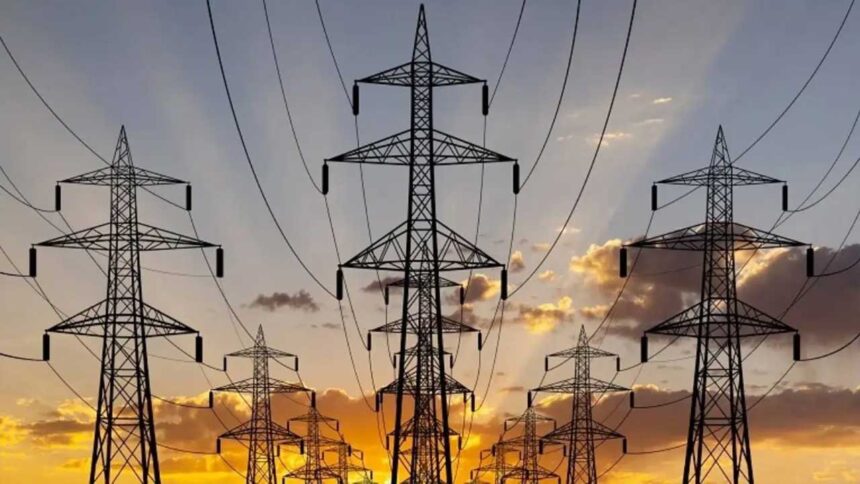
Bangladesh’s Power Division has urgently requested a subsidy of Tk 20,136 crore from the Ministry of Finance to prevent a potential collapse of the national power supply. Officials have warned that failure to release these funds promptly will disrupt production and lead to severe nationwide load-shedding during the upcoming peak summer and irrigation seasons.
The Price Gap and Financial Strain
The request highlights a massive disparity between the cost of electricity production and its retail price. According to Power Division data:
-
Average Production Cost: Tk 12.15 per unit.
-
Wholesale Selling Price (BPDB): Tk 7.04 per unit.
-
Net Loss: The government incurs a loss of Tk 5.27 per unit, which must be covered by state subsidies.
Officials attributed the rising costs to the devaluation of the Taka against the US Dollar, a sharp hike in gas prices (rising from Tk 5.02 to Tk 15.50), and an overcapacity in power plant installations relative to actual demand.
The Burden of ‘Capacity Charges’
A significant portion of the subsidy burden stems from controversial “Capacity Charges” paid to private power plants. Critics and experts point to the previous Awami League government’s “flawed planning” and corruption as the root causes.
Over the last 15 years, the government has paid a staggering Tk 1.33 lakh crore in capacity charges—payments mandated by contract even if the plants remain idle.
During the previous administration, numerous rental and quick-rental power plants were approved despite sufficient capacity, leading to a situation where many plants sit dormant year-round while still drawing massive state funds.
Keeping the Lights On: New Power Plants
In a letter sent to the Finance Division on March 16, the Power Division specified that the requested funds (covering March to December) are critical for three major new plants recently added to the national grid:
-
Sreepur 160 MW (HFO-based)
-
Patuakhali 1,320 MW (Coal-based)
-
Matarbari Ultra-Supercritical (Coal-based)
Maintaining these three plants alone requires Tk 8,244 crore. Additionally, Tk 8,275 crore is needed to clear bills for high-cost power imports from India, while Tk 3,617 crore is required for state-owned and BPDB-run plants.
The IMF Pressure and the Price Dilemma
The International Monetary Fund (IMF) has been pressuring Bangladesh to eliminate energy subsidies as a condition of its $4.7 billion loan package. While the previous government had pledged to phase out subsidies by hiking electricity prices periodically this year, the current interim government has yet to take such measures.
Professor Ejaz Hossain, energy expert and former BUET professor, remarked:
“The massive subsidy is a legacy of the previous government’s poor planning. They intended to hike prices every few months to balance the books, but the current government hasn’t done so. Given the current reality, it is almost impossible to manage this deficit without increasing electricity prices.”
Current Status
Md. Solaiman, Deputy Secretary (Development-1) of the Power Division, told reporters that there has been no positive response from the Finance Ministry yet. While discussions are ongoing, he emphasized that a lack of funding will “undoubtedly impact” the country’s power supply.