In a candid assessment of the nation’s current economic climate, Finance and Planning Minister Amir Khosru Mahmud Chowdhury revealed on Sunday that Bangladesh is not yet fully prepared to graduate from the Least Developed Country (LDC) status.
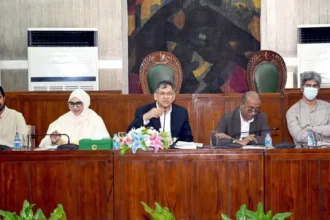
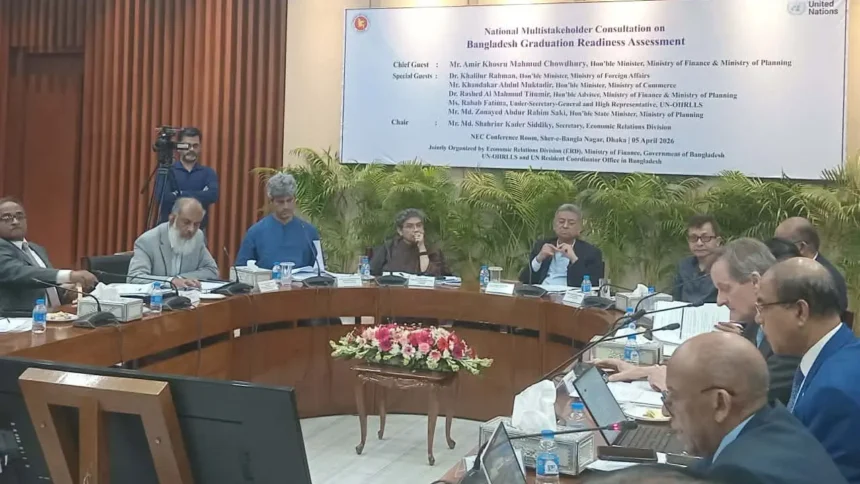
Speaking to reporters following a high-level meeting at the NEC Conference Room in Sher-e-Bangla Nagar, the Minister highlighted that the government is currently prioritizing “daily crisis management” over long-term graduation milestones. The meeting served as a platform to present the key findings of an independent evaluation by UN-OHRLLS (United Nations Office of the High Representative for the Least Developed Countries, Landlocked Developing Countries and Small Island Developing States) regarding Bangladesh’s graduation readiness.
Economic Indicators Under Pressure
Minister Chowdhury painted a sobering picture of the national economy, noting that almost all major indicators are currently on a downward trend. He identified several “major challenges” that have hindered progress, including:
-
Debt Burdens: Mounting pressure from both foreign debt and domestic liabilities.
-
High Interest Rates: Risks associated with borrowing at elevated rates.
-
Structural Weaknesses: General vulnerabilities in the country’s overall financial management.
“The government is struggling and working tirelessly to restore the economy,” the Minister stated, describing the current phase as a period of intense recovery efforts.
The Energy and Inflation Nexus
The Minister expressed deep concern over the energy crisis and disruptions in the global supply chain, which he believes could have long-lasting impacts on the domestic economy. He warned that fluctuations in energy prices would inevitably seep into the costs of food and other daily essentials, further exacerbating inflationary pressures.
While the government has attempted to shield the public from rising global energy prices, Chowdhury admitted that this level of fiscal pressure is unsustainable in the long run. “The government does not want to create sudden additional pressure on the people,” he said. “However, if expenditures from the public fund continue at this rate, the impact will eventually fall on the citizens.”
A Potential Delay in Graduation
Given the “fragile situation,” the Minister suggested that there is room to reconsider the graduation timeline. He indicated that postponing the transition could be a strategic move to ensure that necessary reforms are fully implemented first.
The government’s interim plan focuses on:
-
Strengthening fundamental economic indicators.
-
Enhancing capacity building and skill development.
-
Implementing policy-driven reforms to create a solid economic foundation.
“Once these reforms are in place, graduation will become a realistic and sustainable goal for the future,” Chowdhury added.
High-Level Attendance
The review meeting was attended by several key members of the administration and international representatives, including Foreign Minister Dr. Khalilur Rahman, Commerce Minister Khandaker Abdul Muktadir, Finance and Planning Advisor Dr. Rashed Al Mahmud Titumir, Minister of State for Planning Zonayed Abdur Rahim Saki, and senior UN official Rabab Fatima.
The consensus among officials underscores a shift in focus from meeting calendar deadlines to ensuring the economy is resilient enough to survive the loss of LDC-specific international trade preferences.