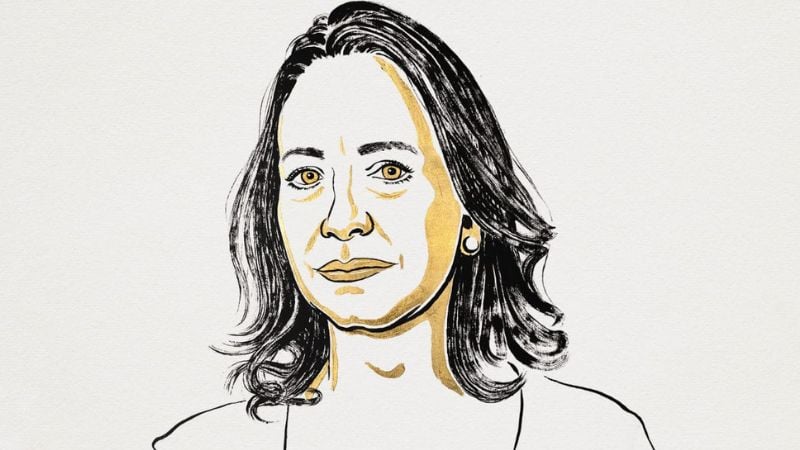
Venezuelan opposition leader María Corina Machado has been awarded the Nobel Peace Prize for her unwavering commitment to democratic rights and her peaceful struggle to transition Venezuela from autocracy to democracy. The Norway-based Nobel Committee announced the winner on Friday, October 10.
The award recognizes Machado’s role in inspiring ordinary Venezuelans to claim their democratic rights and mobilizing a non-violent movement against the nation’s authoritarian regime.
A Symbol of Unity and Courage
The Nobel Committee stated that Machado represents a unique example of courage in Latin American history. She has emerged as a symbol of unity for Venezuela’s deeply divided opposition forces, bringing all opposition power under her leadership to demand free and fair elections and a representative government.
Venezuela, once a relatively prosperous and democratic nation, has devolved into a repressive, authoritarian state engulfed in a severe humanitarian and economic crisis. While a few beneficiaries have profited, the majority of Venezuelans suffer from extreme poverty. The state employs brutal repression against its own citizens, leading to the emigration of nearly eight million Venezuelans. The regime systematically silences the opposition through election fraud, false charges, and imprisonment.
Fighting for the Ballot
Despite the immense difficulty of conducting political activities in Venezuela, Machado has consistently pressed for fair elections. Her courageous statement, “We choose the ballot, not the bullet,” brought her widespread attention. She has since fought relentlessly for judicial independence, human rights, and democratic representation through her role as a public representative and various organizations, dedicating herself for years to the liberation of the Venezuelan people.
Machado was nominated as the opposition coalition’s candidate for the 2024 presidential election, but the ruling party conspiratorially disqualified her candidacy. Undeterred by the adverse situation, she did not hesitate to endorse an alternative candidate, Edmundo González Urrutia. Following this, millions of volunteers, setting aside political differences, united. They were trained as election observers to ensure the transparency and neutrality of the vote. Despite severe risks of harassment, arrest, and torture, citizens across the country maintained a strict watch at polling centers to ensure the final count was accurately documented, preventing the government from stealing the popular mandate through ballot tampering and false results.
Record Nominations
Meanwhile, the BBC reports that this year saw a total of 338 nominations for the Nobel Peace Prize, comprising 244 individuals and 94 organizations or institutions. The Nobel Peace Prize was last year awarded to the Japanese organization Nihon Hidankyo, which represents survivors of the atomic bombings and works toward a world free of nuclear weapons.
Historically, the youngest recipient remains Pakistan’s Malala Yousafzai, who received the prize at just 17 in 2014. Conversely, the oldest recipient was Joseph Rotblat, who was 86 when he won in 1995. To date, 31 institutions have been honored with the Nobel Peace Prize.