The International Monetary Fund (IMF) has released its July 2026 World Economic Outlook Update, painting a picture of a global economy navigating a complex tug-of-war between geopolitical instability and rapid technological innovation.
The IMF projects global economic growth to reach 3.0 percent in 2026, a modest decline from the 3.5 percent average seen in 2024–25. Looking ahead, the institution anticipates a slight recovery, with growth projected to climb to 3.4 percent in 2027.
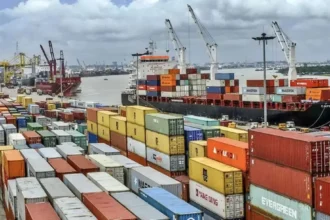
According to the report, the global outlook is currently defined by two powerful, opposing forces: The Headwinds: Ongoing conflict in the Middle East—specifically the energy shock triggered by the closure of the Strait of Hormuz—continues to act as a significant drag on global supply chains and energy costs. The Tailwinds: A surge in demand for artificial intelligence (AI) and robust investment in high-tech manufacturing are providing a critical buffer, helping to offset the negative impacts of the war.
The IMF emphasizes that the economic fallout from these “crosscurrents” is not being felt equally. The impact is largely determined by a country’s exposure to energy imports and its role in the global technology value chain. Winners: Energy-exporting nations outside of the conflict zones and economies heavily integrated into the AI-driven technology cycle—such as leading hardware exporters—are showing resilience and, in some cases, stronger-than-expected activity. Vulnerable Economies: Conversely, energy-importing nations with limited participation in the technology sector, particularly many low-income countries, are facing significant economic pressure.
Inflationary Pressures Stall Progress
The report highlights a concerning pause in the global disinflationary trend that had been taking hold since the beginning of 2024. Global headline inflation is now expected to rise to 4.7 percent in 2026, up from 4.1 percent in 2025, before projected to ease to 3.9 percent in 2027. The IMF warns that if the Middle East conflict intensifies, commodity price volatility could spike, further threatening supply chains and complicating efforts to manage inflation.
The forecast offers a mixed bag for the world’s major economies: United States: Growth is projected to reach 2.3 percent in 2026, supported by strong fiscal policy and high productivity in the tech sector. China: Growth is expected to reach 4.6 percent, driven by high-tech manufacturing and public infrastructure investment. India: Despite a slight trim in its outlook, India remains one of the world’s fastest-growing major economies, with a projected growth rate of 6.4 percent.
While risks remain tilted to the downside, the IMF identified potential “upside” scenarios. A swifter-than-expected normalization of energy markets, sustained growth in technology investment, and enhanced international trade cooperation could result in economic performance that exceeds current projections.