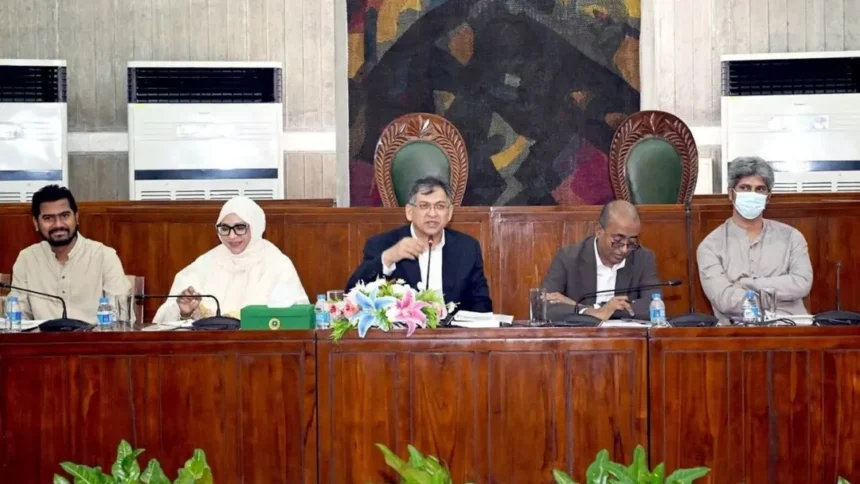
The non-partisan caretaker government system and mandatory referendum provisions are set to return to the Constitution of Bangladesh, announced Home Minister and Constitution Reform Committee Chairman Salahuddin Ahmed.
Speaking to reporters following the sixth meeting of the special committee on constitutional reform on Tuesday (October 6), the minister stated that the government is also moving to grant legal and constitutional protection—along with immunity—to the heroes and ordinary participants of the July mass uprising (known as “July Warriors”) through a specific schedule, while ensuring historical recognition of the movement.
According to the committee, the upcoming constitutional amendment bill will be tabled in Parliament based on the “July National Charter” signed by various political parties.
Key Highlights of the Proposed Reforms:
-
Caretaker Government & Referendum: The caretaker government system will be re-established, and mandatory referendum provisions will be fully restored. Salahuddin Ahmed clarified that basic structural changes—such as those involving the preamble, core principles under Article 8, Articles 48 and 56, and the caretaker framework—will require a public referendum for citizen approval before presidential assent, following the High Court’s ruling on the 15th Amendment.
-
Caretaker Framework Under Review: The new caretaker structure will not be an exact replica of the pre-1996 or 2006 models. The government is actively consulting society stakeholders, including the Supreme Court Bar Association, judges, former justices, constitutional experts, and academics. Notably, the government favors removing the final option of vesting the caretaker chief’s role with the President due to past controversies.
-
Constitutional Immunity for July Warriors: To avert legal complexities and judicial constraints, specific schedules will be designated in the Constitution to grant legal security and indemnity to July Warriors.
-
Trials for Crimes Against Humanity: The committee addressed demands to expedite trials for crimes against humanity, genocide, and related offenses committed during the uprising by former Prime Minister Sheikh Hasina and her associates. While affirming government and judicial independence, the administration assured full cooperation in accelerating auxiliary legal procedures like investigations, prosecutions, and charge-sheet formulations.
-
Alignment with the July National Charter: Emphasizing consensus, the minister noted that the reforms will strictly mirror the signed agreements and notes of dissent established during the months-long discussions following the uprising. A universally acceptable bill incorporating national interests and election manifesto commitments will be presented to Parliament.