Faced with the harsh realities of pandemic-induced economic disruptions, the government has scaled down its gross domestic product (GDP) growth projection for the 2020-21 fiscal year to 6.1 percent. This marks the second revision within the current fiscal year, which initially targeted an ambitious 8.2 percent expansion before being dialed back to 7.4 percent.
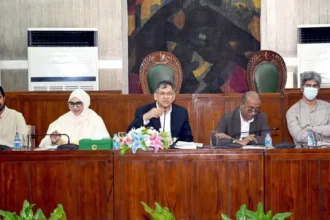
The new target was formalized during a meeting of the fiscal coordination council, chaired by Finance Minister AHM Mustafa Kamal. To counter the slowdown, policymakers are mapping out an expansionary budget for the 2021-22 fiscal year, estimated at Tk 602,484 crore—representing 17.3 percent of the country’s GDP.
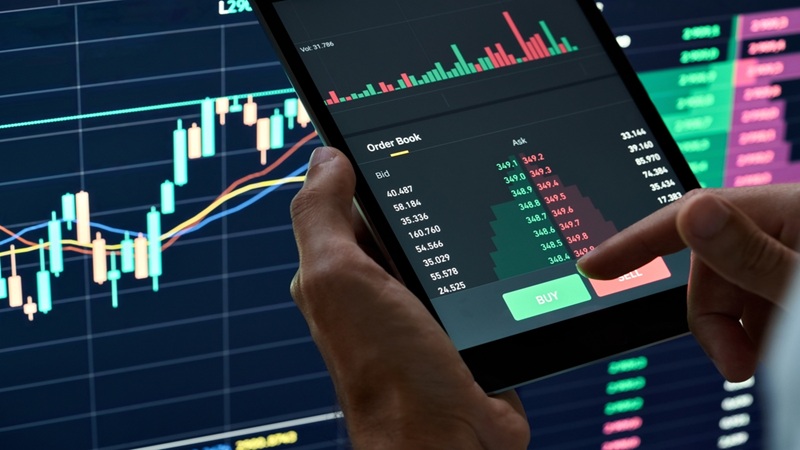
In a stark divergence from macro-level growth cuts, the country’s stock markets have extended their winning streak to eight consecutive trading days. The DSEX, the benchmark index of the Dhaka Stock Exchange (DSE), climbed 63 points or 1.16 percent to settle at 5,498.21.
Sayedur Rahman, president of the Bangladesh Merchant Bankers Association, attributed this paradox to a global peak in stock markets—including neighboring India—which has bolstered local investor confidence despite deteriorating health indicators. Furthermore, a substantial liquidity surplus in the financial sector paired with low bank deposit rates has driven funds directly into equities.
“As other investment avenues look less lucrative, the capability to trade from home has encouraged an influx of general funds,” explained Rahman, who also serves as the managing director of EBL Securities. Market confidence was further buoyed by strong first-quarter corporate earnings, particularly in the banking sector, alongside regulatory assurances that trading operations would remain uninterrupted during pandemic restrictions.
The bullish sentiment echoed across the port city, where the Chittagong Stock Exchange’s general index (CASPI) advanced by 143 points or 0.91 percent to reach 15,867. Out of 236 traded issues, 132 advanced, 63 declined, and 41 remained unchanged.
Reflecting this corporate resilience, shares of IPDC Finance rose by 2.08 percent to Tk 24.50 following a strong first-quarter earnings disclosure. The non-bank financial institution (NBFI) reported a 36 percent year-on-year surge in net profit to Tk 20.49 crore for the January-March 2021 period.
While its net interest income grew modestly by 3.6 percent to Tk 57 crore, IPDC’s investment income swelled more than three times to Tk 23 crore. However, pointing to tight cash flows, the company’s net operating cash flow per share swung to a negative Tk 18.09 from a positive Tk 1.98 a year earlier. IPDC’s net asset value per share stood at Tk 16.52 as of March 31, 2021.
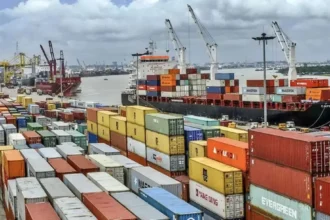
While the financial markets thrive on excess liquidity, the real economy’s primary engine—the readymade garment (RMG) sector—is calling out for a financial lifeline. The Bangladesh Garment Manufacturers and Exporters Association (BGMEA) has formally requested low-cost stimulus funds from the government to cover three months of workers’ salaries (April–June) and upcoming Eid festival allowances.
“We have requested low-cost funds to ensure timely payment for our workforce during these testing months,” stated newly elected BGMEA President Faruque Hassan following an emergency leadership meeting at the association’s Uttara headquarters.
With the monthly wage bill for export-oriented apparel units hovering around Tk 3,000 crore, factory owners are looking to the government to safeguard the industry’s supply chain and labor stability as the pandemic wears on.