Residents of Bangladesh’s capital are facing an “unbearable” surge in mosquito populations, a situation now compounded by a looming fuel crisis that threatens to paralyze the city’s primary defense: fogging operations.
Despite nearly 830 crore BDT spent over the last decade, the Dhaka North City Corporation (DNCC) and Dhaka South City Corporation (DSCC) are struggling to contain the infestation. The current crisis has escalated as both corporations report a severe shortage of diesel, the essential fuel required to run fogging machines and mix with pesticides.
A Looming “Dark Age” of Mosquitoes
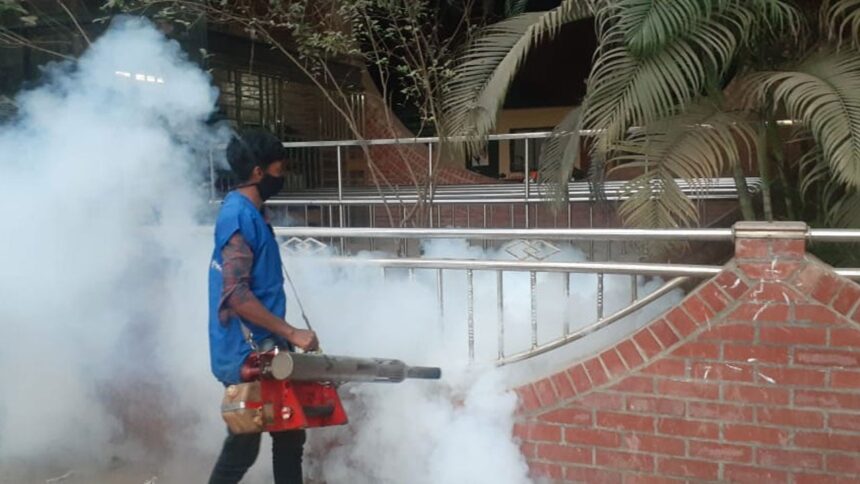
The “fogging” method, which uses smoke to kill flying mosquitoes, relies heavily on diesel. Supply chain disruptions have left authorities scrambling.
-
DNCC requires approximately 327,000 liters of diesel urgently.
-
DSCC has requested an emergency allocation of 200,000 liters.
Suppliers have warned that pesticide stocks (Malathion 5% RFU) are nearly exhausted because diesel constitutes over 90% of the mixture. Without an immediate intervention from the Bangladesh Petroleum Corporation (BPC), fogging operations in most wards are expected to halt by late April.
City dwellers, exhausted by the constant biting, have begun to mock the situation, with some ironically remarking that a “Golden Age for Mosquitoes” is approaching where the insects will “celebrate” without fear of chemical intervention.
Failed “Therapies” and Massive Spending
The persistence of the mosquito menace raises sharp questions about the effectiveness of city spending. Over the last ten years:
-
DNCC spent 560 crore BDT.
-
DSCC spent 270 crore BDT.
-
For the 2024-25 fiscal year, a combined 154 crore BDT has been allocated.
Over the years, the city corporations have experimented with various “innovative” solutions—dubbed “therapies” by locals—including flying drones to identify breeding sites and releasing frogs, ducks, and Tilapia fish into water bodies. However, these measures have largely failed to curb the breeding cycle.
Ground Reality: Life Under the Net
The situation on the ground remains dire. In areas like Basabo and Mirpur, residents report that mosquitoes are rampant even during the day.
“It feels like the mosquitoes are increasing every day, but we don’t see the City Corporation spraying medicine,” said Riazul Islam, a resident of Basabo. “We have to stay inside mosquito nets or keep coils burning even during the day.”
The lack of elected ward commissioners for nearly a year and a half has further crippled the monitoring of grassroots cleaning and spraying activities.
Authorities Call for Public Cooperation
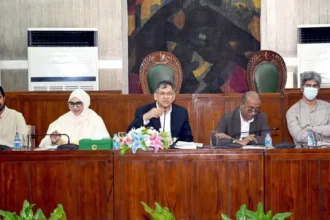
DNCC Administrator Md. Shofiqul Islam Khan and DSCC Administrator Md. Abdus Salam have both assured the public that they are pushing for emergency fuel supplies. However, they emphasized that chemical spraying alone is not the solution.
“It is difficult to control mosquitoes only by applying medicine,” said Khan. “Unless we keep our surroundings clean and create public awareness, this battle cannot be won easily.”
Renowned entomologist Dr. Kabirul Bashar of Jahangirnagar University added that while the City Corporation must improve its efficiency, a “combined effort” involving community participation is vital.
As the city enters the peak of the mosquito season, the health of millions of Dhaka residents now depends on whether the “cry for diesel” is heard before the buzz of the mosquitoes becomes a full-blown public health crisis.