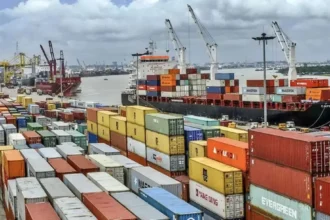
Bangladesh’s economy is grappling with an intensifying trade deficit as the gap between export earnings and import expenditures continues to widen. According to the latest Balance of Payments (BoP) report from Bangladesh Bank, the trade deficit reached $11.55 billion during the first half (July–December) of the 2025-26 fiscal year.
This represents an 18.34% increase compared to the same period last fiscal year, when the deficit stood at $9.76 billion.
Key Drivers of the Deficit
The surge in the trade gap is primarily attributed to a mismatch between global market trends and local demand:
-
Rising Import Costs: Total imports hit $33.68 billion, a 5% increase from $32 billion in the previous year. Officials noted that the upcoming Ramadan month has triggered a spike in imports of essential commodities like edible oil, sugar, chickpeas, pulses, and dates.
-
Sluggish Exports: Export earnings fell by 0.9%, sliding to $22.12 billion from $22.32 billion in the corresponding period last year.
-
External Factors: High costs for fuel, industrial raw materials, and the rising price of goods in international markets have further strained the economy.
Current Account and Overall Balance
Despite the trade gap, the Current Account Balance showed signs of relative improvement, though it remains in the red. The deficit narrowed to $340 million in December 2025, compared to $520 million in the previous year.
In a positive turn, the Overall Balance recorded a surplus of $1.94 billion, a significant recovery from the $460 million deficit reported during the same period in the last fiscal year.
Remittances and Foreign Investment: A Mixed Bag
The economic outlook is buoyed by strong performances in other sectors, providing much-needed stability:
| Category | FY 2024-25 (July-Dec) | FY 2025-26 (July-Dec) | Growth/Change |
| Remittances | ~$13.78 Billion | $16.26 Billion | +18% |
| Direct Investment (FDI) | $550 Million | $820 Million | +49% |
| Portfolio Investment | -$50 Million | -$100 Million | -100% (Outflow) |
While the 18% surge in remittances and the growth in Foreign Direct Investment (FDI) offer a cushion, the capital market remains under pressure. Portfolio investment saw an outflow of $100 million as foreign investors pulled funds from the stock market.
Looking Ahead
Financial analysts warn that if the trade deficit continues its upward trajectory, it could place significant pressure on foreign exchange reserves, exchange rates, and the nation’s overall financial stability. The challenge for policymakers will be balancing the high demand for essential imports with the need to reinvigorate export growth.