In a developing political standoff, Bangladesh Jamaat-e-Islami has announced that its newly elected Members of Parliament will not take their oaths of office if BNP lawmakers refuse to be sworn in as members of the Constitutional Reform Council.
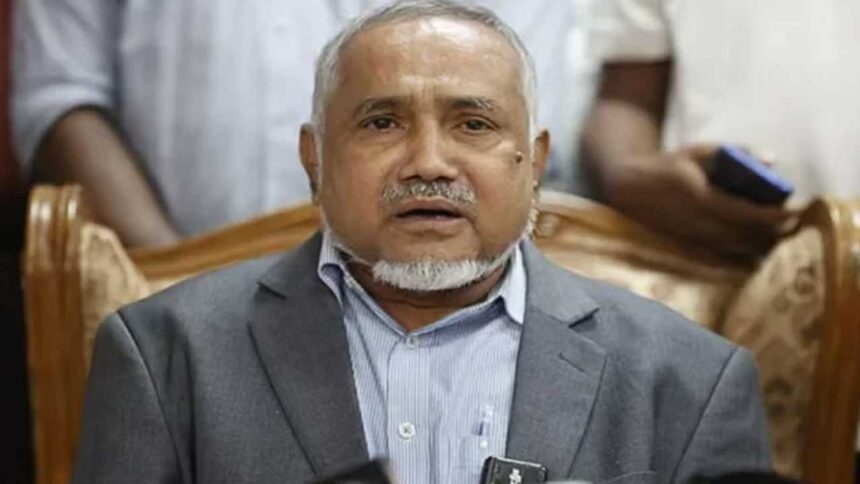
The announcement was made on Tuesday (February 17, 2026) morning by Syed Abdullah Mohammad Taher, the Nayeb-e-Amir of Jamaat-e-Islami, just as the 13th National Parliament prepared for its historic swearing-in ceremony.
Reform-Driven Boycott
Taher clarified that while Jamaat and its 11-party alliance partners have arrived at the Parliament building for the scheduled 12:00 PM session, their participation is conditional.
“If the BNP does not take the oath for the Constitutional Reform Council, the newly elected MPs of Jamaat will not take any oath at all,” Taher told the media. “We believe that a parliament without constitutional reform is meaningless.”
The tension arises from a dual-oath process prepared by the Parliament Secretariat following the February 12 general election and a simultaneous national referendum. Lawmakers were expected to take two separate oaths: one as a Member of Parliament and another as a member of the newly proposed Constitutional Reform Council.
BNP’s Legal Objections
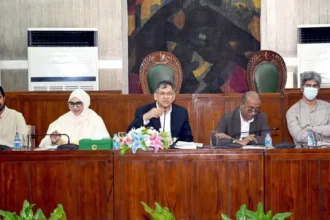
The BNP, which secured a landslide victory in the recent polls, has taken a firm stance against the second oath. Speaking to fellow lawmakers at the Parliament Secretariat, BNP Standing Committee member Salahuddin Ahmed explained that the “Constitutional Reform Council” currently lacks a legal foundation within the existing Constitution.
“None of us were elected as members of a Constitutional Reform Council. It has not yet been incorporated into the Constitution,” Ahmed stated, brandishing two different colored forms (white for the MP oath and blue for the Reform Council).
He further elaborated on the party’s legal rationale:
-
Third Schedule Requirements: Under the current law, the specific forms for oaths are dictated by the Third Schedule of the Constitution.
-
Constitutional Order: The BNP argues that the results of the referendum must first be formally adopted into the Constitution and the Council’s authority established before members can legally be sworn in.
-
Adherence to Law: “We have followed the Constitution until now, and we will continue to do so,” Ahmed added, noting that the decision was directed by Party Chairman Tarique Rahman.
A Historic Swearing-In
While the BNP MPs have reportedly proceeded with their primary oaths as Members of Parliament, their refusal to join the Reform Council has created a rift with Jamaat-e-Islami, their former long-term ally.
The Parliament Secretariat had meticulously prepared for the ceremony, which for the first time featured the Chief Election Commissioner administering the oaths. As the situation unfolds, the focus remains on whether the new government can bridge this constitutional divide before the official cabinet formation later this afternoon.