
In a landmark move for the nation’s economy, the government has granted policy approval for Bangladesh’s first-ever Free Trade Zone (FTZ). The zone is set to be established on approximately 600 to 650 acres of land in the Anwara Upazila of Chattogram.
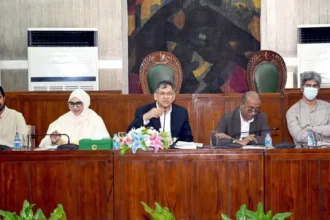
The announcement was made by Chowdhury Ashik Mahmud Bin Harun, Executive Chairman of the Bangladesh Investment Development Authority (BIDA), during a press conference held at the Bangladesh Foreign Service Academy on Monday.
Key Highlights of the FTZ
-
Location: Anwara Upazila, Chattogram.
-
Area: 600–650 acres of strategic coastal land.
-
Status: Deemed “Overseas Territory” for trade purposes.
-
Operations: Goods can be stored, manufactured, and re-exported without customs obligations or duties.
Strategic Importance and “Time to Market”
During the press briefing, which followed a high-level governing board meeting of BIDA, the Bangladesh Economic Zones Authority (BEZA), and the Moheshkhali Integrated Development Authority (MIDA), the BIDA chief highlighted how the FTZ would revolutionize Bangladesh’s trade logistics.
“The Free Trade Zone will operate as an offshore territory. This will significantly solve our ‘time to market’ issues,” said Ashik Chowdhury.
He specifically noted that raw materials, such as American cotton, could be stored in the zone duty-free. This allows local manufacturers to access materials instantly or re-export them to other global markets like Vietnam, depending on demand.
Why Anwara?
Addressing why Anwara was selected over other regions, the BIDA Chairman explained that the geographical necessity of an FTZ requires proximity to the sea.
-
Geographic Advantage: Its coastal location ensures seamless international shipping connectivity.
-
Global Model: The zone is being modeled after successful international hubs like Dubai’s Jebel Ali Free Zone, which acts as a central node for global trade and economic activity.
Legal Reforms and Next Steps
To make the FTZ a reality, the government will need to amend eight laws and regulations. While policy approval has been secured from the governing boards—chaired by the Chief Adviser Professor Muhammad Yunus—the proposal will soon be presented to the Cabinet for final clearance.
The meeting also saw other major decisions, including the repurposing of land in Mirsarai for a Defence Industrial Park and a policy decision to unify various investment promotion agencies under a “Single Umbrella” to simplify the investor experience.