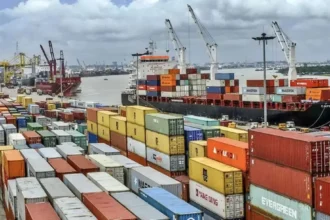
Bangladesh’s gross foreign exchange reserves have adjusted to $32.34 billion after the central bank cleared the import bills for November and December through the Asian Clearing Union (ACU).
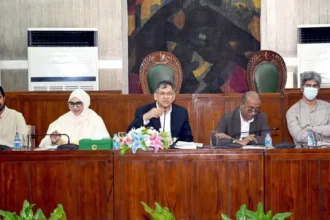
The payment, totaling $1.53 billion, was processed on Thursday, according to Arif Hossain Khan, Executive Director and Spokesperson of Bangladesh Bank. Despite the outflow, officials maintain that the reserve position remains stable and well within the safety threshold required to meet national import demands.
Key Reserve Metrics at a Glance
According to the latest data from the central bank, the reserves are currently measured by three different standards:
| Measurement Category | Current Value (Jan 8, 2026) | Previous Value (Jan 7, 2026) |
| Gross Reserves | $32.34 Billion | $33.78 Billion |
| BPM-6 (IMF Method) | $27.85 Billion | $29.19 Billion |
| Net International Reserves (NIR) | ~$24.00 Billion | — |
Note: The Net International Reserves (NIR) represent the “spendable” portion of the reserves.
Economic Resilience and Import Cover
Currently, Bangladesh’s reserves are sufficient to cover approximately 4.5 months of import expenses, assuming a monthly expenditure of $5.5 billion. International standards generally dictate that a country should maintain at least three months of import cover to ensure economic stability.
The central bank spokesperson noted that the reserve has shown remarkable resilience. After hitting a record high of $48.06 billion in August 2022, the reserves faced a significant decline due to capital flight and economic mismanagement under the previous administration, dropping to $20.39 billion by July 2024.
However, the interim government’s strict measures against money laundering, combined with a surge in remittance inflows through legal channels, have allowed the central bank to rebuild the stockpile. This recovery occurred even after the government settled roughly $4 billion in overdue debts inherited from the past regime.
Understanding the ACU Mechanism
The Asian Clearing Union (ACU) is a regional payment arrangement that allows member countries to settle trade-related payments for intra-regional transactions on a net basis every two months.
-
Headquarters: Tehran, Iran.
-
Current Active Members: Bangladesh, Bhutan, India, Iran, Maldives, Myanmar, Nepal, and Pakistan.
-
Recent Changes: Sri Lanka’s membership is currently suspended due to its ongoing economic crisis and inability to meet payment conditions.
The ACU system helps minimize the use of foreign exchange reserves for every individual transaction, though the bi-monthly “settlement” usually results in a temporary dip in the total reserve figures of member nations.