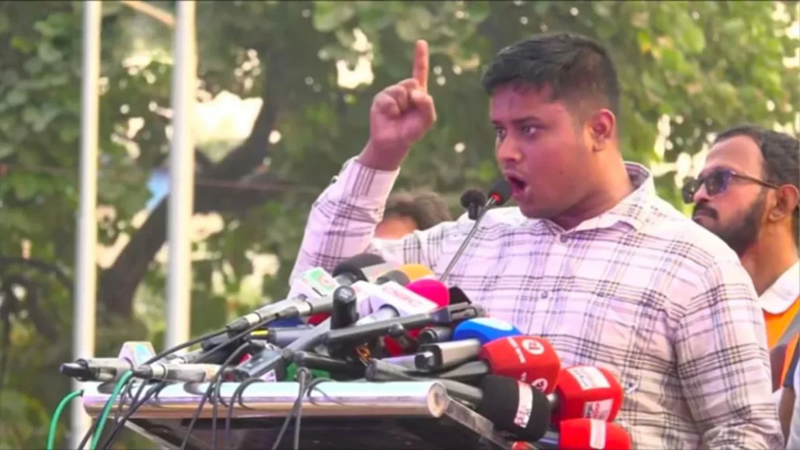
Recent remarks by Hasnat Abdullah, Chief Coordinator of the southern region of the National Citizen Party (NCP), have sparked sharp reactions in both Bangladesh and India. During a public rally, Hasnat allegedly threatened to separate India’s northeastern “Seven Sisters” states from the Indian Union.
Following his comments, questions emerged in political circles over whether the statement reflected Hasnat Abdullah’s personal views or the official position of the NCP. At the time of the speech, leaders from Jamaat-e-Islami and other political parties were also present on the stage, further intensifying the debate.
In response, the NCP clarified that Hasnat Abdullah’s remarks regarding the Seven Sisters were conditional and represented his personal understanding, not the party’s official stance.
However, the comments drew a strong reaction from India. Assam Chief Minister Himanta Biswa Sarma told Indian media that if Bangladeshi leaders continue to issue threats about separating India’s northeastern region from the mainland, New Delhi will not remain silent for long.
Amid the controversy—alongside protests surrounding the Indian High Commission in Dhaka and the “July Unity” banner issue—India’s Ministry of External Affairs summoned Bangladesh’s High Commissioner in New Delhi on Wednesday. Earlier, on Sunday, India’s High Commissioner to Bangladesh, Pranay Verma, had been summoned by Bangladesh’s Ministry of Foreign Affairs in Dhaka.
Former diplomat and international relations analyst Humayun Kabir told BBC Bangla that India considers the Seven Sisters issue extremely sensitive. He noted that while many refrain from speaking openly on such matters, remarks of this nature can have significant implications for bilateral relations between Bangladesh and India.
Source: BBC Bangla