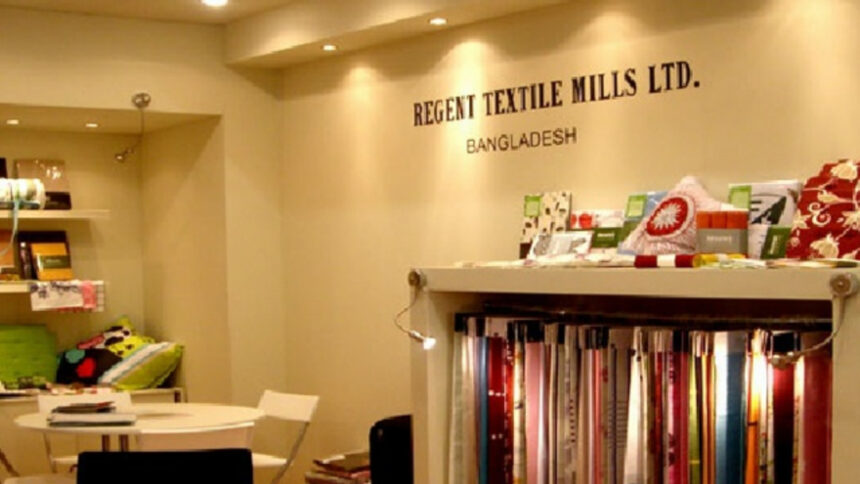
Despite being mired in uncertainty, with its factory production halted for over three and a half years and financial reports unreleased for four, Regent Textile Mills Limited has witnessed a baffling surge in its share price, which has more than doubled in the last month.
According to data, on November 16, the share price of Regent Textile on the Dhaka Stock Exchange (DSE) was Tk 1.40. Since then, the company’s share price has been on an upward trajectory. Most recently, on Thursday (December 11), the share price reached Tk 3.10. During this period, the company’s share price has increased by a staggering 2.21 times.
Factory Closure and Regulatory Non-Compliance
DSE officials found the Regent Textile factory to be non-operational when they visited on September 26, 2023. This information was subsequently published on the stock exchange’s website. DSE data indicates that the company’s factory has been shut down since July 2022.
Under securities law, there is a mandate to inform investors if a factory’s operations cease. However, Regent Textile has reportedly not provided any such information to the stock exchange.
Financial Reporting Blackout
Regent Textile Mills last published its audited financial information for the 2020-21 fiscal year. Since then, the company has failed to release any further financial reports. Consequently, investors are unable to ascertain the company’s true financial and business standing.
In the fiscal year under review (2020-21), Regent Textile’s revenue was Tk 110.87 crore, an increase from Tk 86 crore in the previous financial year. However, the company’s net loss after tax in that year exceeded Tk 20.80 crore, significantly higher than the approximately Tk 4 crore loss recorded in the previous year.
The company’s loss per share (LPS) stood at Tk 1.62 for FY 2020-21, compared to Tk 0.31 in the preceding year. As of June 30, 2021, the company’s Net Asset Value Per Share (NAVPS) was Tk 26.52. The Regent Textile management did not issue any dividends to investors for the fiscal year 2020-21, a contrast to the previous year when it distributed a 1% cash and 1% stock dividend.
The dramatic spike in share price, given the production halt, financial non-disclosure, and mounting losses, presents a considerable puzzle for market observers and raises serious questions about the potential underlying factors driving the stock’s exceptional performance.