The visible economic landscape of Bangladesh has undergone a significant transformation within the span of a year. In a stark reversal of the previous administration’s approach—which relied heavily on borrowing from the banking system—the new government has begun repaying outstanding loans to banks since taking office.
This change—where the government is not taking new loans but is instead settling previous debts in the current fiscal year—is being hailed by economists as a clear example of a new direction in fiscal discipline and expenditure control.
Sharp Decline in Government Bank Borrowing
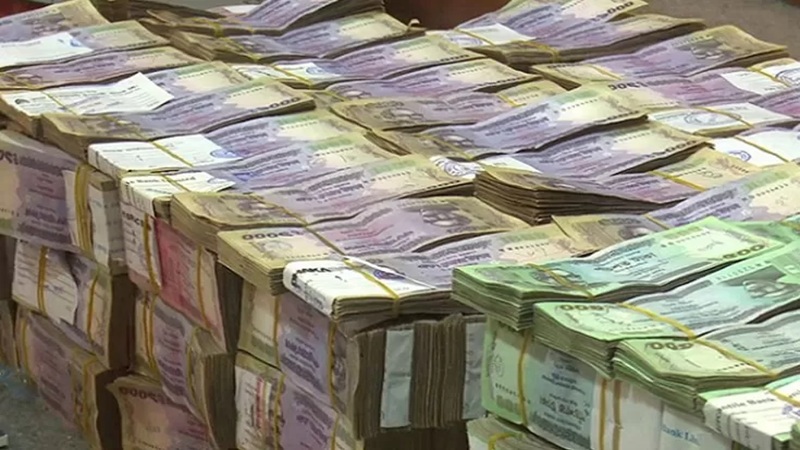
Latest data from the Central Bank shows a major shift in the government’s bank credit flow. During the first four months of the current fiscal year (FY 2025-26, spanning June 30 to October 30, 2025), the government repaid $503 crore (BDT 5.03 billion) of its debt to the banking system. In contrast, during the same period last fiscal year, the government had borrowed a staggering $15,450 crore (BDT 154.50 billion) from banks.
This indicates a substantial year-on-year change; the government is now not borrowing from banks, but actively repaying previous loans.
Net Debt Position Reduces
The report highlights a reduction in the government’s total net debt to the banking system. On June 30, the total net debt stood at $5,50,904.96 crore (BDT 5.509 trillion), which decreased to $5,50,401.65 crore (BDT 5.504 trillion) by October 30.
On October 30 alone, the government’s net debt decreased by nearly $1,009 crore (BDT 10.09 billion). A significant portion of this repayment was directed toward the short-term ‘Ways and Means Advance’ loan from the Bangladesh Bank. On that day, the government returned $899 crore (BDT 8.99 billion) to the Bangladesh Bank and $2,541 crore (BDT 25.41 billion) to scheduled commercial banks.
Non-Bank Sources Bolster Finances
Instead of relying on bank financing, the government has been raising funds from non-bank sources. According to the Bangladesh Bank, the government collected $9,565.52 crore (BDT 95.65 billion) between June and October by selling Treasury Bills and Bonds to non-bank financial institutions, insurance companies, and individual investors. Excluding the net position of National Savings Certificates, the government’s total borrowing from domestic sources stood at $9,062 crore (BDT 90.62 billion).
Economists See a New Financial Trajectory
Economists are calling this a “new trend” in Bangladesh’s financial system. They note that the previous government’s massive bank borrowing had injected excessive money into the market, driving up inflation. The current administration, following the change in government, has implemented stricter revenue management and focused on expenditure restraint.
Sector specialists attribute the reduction in government bank borrowing largely to the cancellation of unnecessary and non-profitable development projects. The new government has either suspended or halted many low-priority projects. Furthermore, a policy of austerity is being applied to many ongoing development projects, slowing down the pace of spending. This slowdown in development expenditure and the project review process have reduced the government’s funding needs, playing a crucial role in decreasing bank borrowing.
The National Board of Revenue (NBR) also reported better revenue collection in the first quarter of the current fiscal year compared to the last. This improved revenue performance, coupled with the government’s strong stance on expenditure control, has made it possible to repay, rather than incur, new bank debt.
Implications and Cautions
The decrease in government bank borrowing is expected to ease inflationary pressure and, simultaneously, increase the capacity of banks to lend to the private sector. This could have a positive impact on production and employment generation.
However, analysts have sounded a note of caution: if the pace of development projects remains slow for an extended period, it could pose a risk of investment stagnation and reduced economic growth.