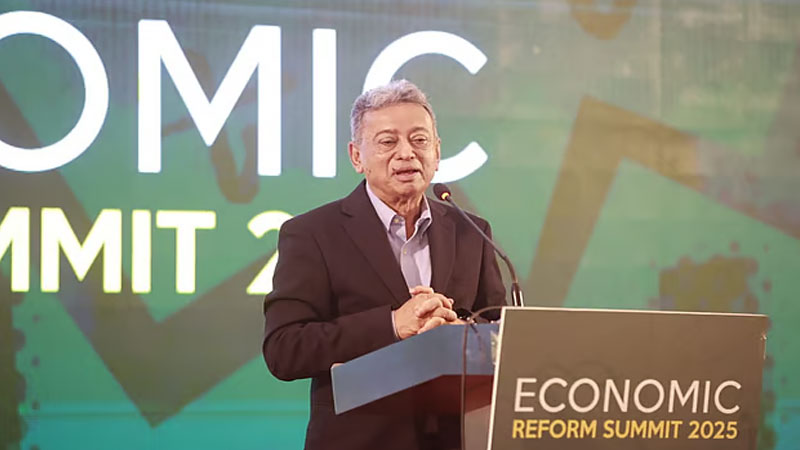
A senior leader of the Bangladesh Nationalist Party (BNP) announced a series of major economic reforms, including the abolition of the Financial Inclusion Division (FID) and granting full independence to the central bank, if the party returns to power.
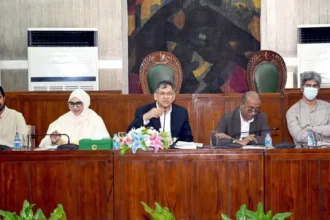
Amir Khosru Mahmud Chowdhury, a Standing Committee Member of the BNP, made the remarks as the chief guest at the ‘Economic Reform Summit’ held at a Gulshan hotel in Dhaka on Monday. The event was organized by private entities including Voice for Reform, BRAMIN, Innovision Consulting, Fintech Society, and Nagorik Coalition.
Abolition of Financial Institutions Division (FID)
Mr. Chowdhury stated that a BNP government would abolish the Financial Iclusions Division (FID) under the Ministry of Finance. He alleged that the division was created to “control state-owned banks” and facilitate “looting” by appointing favored individuals as Managing Directors (MDs) and to the board.
The BNP had abolished it the last time we were in power, but Sheikh Hasina brought it back. The BNP will abolish it again if we return to power,” he asserted.
Central Bank Autonomy and Bureaucracy
The BNP leader stressed that to reform the financial sector and restore discipline, the Bangladesh Bank must be given full independence, not just autonomy. He also pledged to implement all necessary reforms to boost investment.
Regarding the bureaucracy, Mr. Chowdhury said the BNP would not “challenge” or “hold accountable” the civil administration. Instead, their responsibilities would be reduced, and power would be decentralized in all areas of government. He emphasized that the responsibility for policy formulation would rest with policymakers, not the bureaucracy.
He also questioned the effectiveness of splitting the National Board of Revenue (NBR) into two divisions, expressing doubt that it would yield any benefits as both divisions would still be managed by bureaucrats. He added that the BNP has a “different plan” for the NBR.
Concerns over Economic Model and Energy Crisis
Speakers at the panel discussion highlighted critical issues facing the economy:
- Energy Crisis: Energy expert M Tamim criticized the government for the current severe energy crisis, noting that over the last 15 years, there has been no investment in utilizing domestic energy sources. Instead, an estimated $30 billion was spent on setting up power plants, which he suggested offered the most scope for corruption.
- Economic Inequality: Professor Rashed Al Mahmud Titumir of the University of Dhaka’s Development Studies department stated that the previous government’s growth model had created poverty and unemployment. He noted that the reality of their “economic miracle” is now exposed, with inflation eroding common people’s purchasing power, leading to increased poverty. He mentioned that an additional 3 million people are projected to fall below the extreme poverty line, and 1.3 million youths are unemployed, with one in three university graduates being jobless. He concluded that Bangladesh is at a “historical juncture” that requires a “new economic model.”
- Investment Policy: Masrur Reaz, Chairman of Policy Exchange Bangladesh, pointed out that Bangladesh’s investment situation is lagging due to a lack of a long-term plan and a National Investment Policy. He stressed the need for a systematic investment promotion strategy linked to national trade, export, and import policies.
Political Culture and Reform
Speaking to journalists after the event, Mr. Chowdhury emphasized that political demands and reforms should be taken to the people and passed in parliament with a people’s mandate, rather than being sought on the streets.
He added that sustainable reforms require a change in the country’s political culture, which necessitates bringing in tolerance and respect for differing opinions, even in disagreement.
Other notable speakers at the event included Manzur Hossain (Planning Commission), Nakibur Rahman (Jamaat-e-Islami USA Spokesperson), Mohammad Hasan Arif (EPB Vice Chairman), Snehasish Barua (Accountant), Jyoti Rahman (Counterpart Executive Editor), and Wasim Alim (Chaldal CEO).