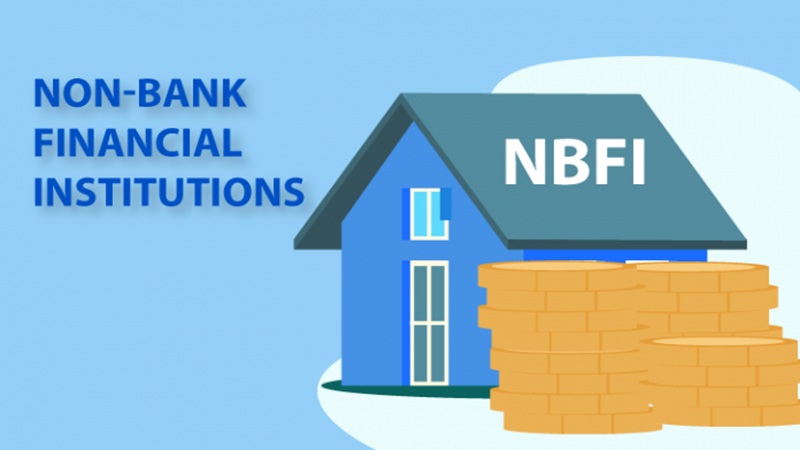
Bangladesh is set to see significant restructuring in its financial sector, with plans announced for the merger of five Islamic banks and the liquidation of nine non-bank financial institutions (NBFIs).
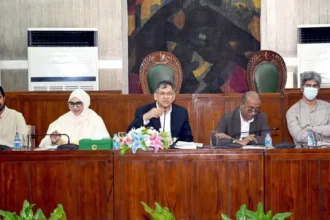
This information was revealed by Principal Advisor’s Press Secretary, Shafiqul Alam, during a press briefing at the Foreign Service Academy on Bailey Road, citing Bangladesh Bank Governor Dr. Ahsan H. Mansur. The developments were discussed earlier at the National Steering Committee meeting on the implementation and monitoring of the strategy for Bangladesh’s smooth and sustainable graduation from Least Developed Country (LDC) status. The meeting was chaired by Principal Advisor Professor Muhammad Yunus at his office in Tejgaon.
Banking and Economic Outlook
Bangladesh Bank Governor Dr. Mansur reportedly highlighted several areas of economic success, stating that the country currently holds forex reserves equivalent to five months of imports.
He noted that inflation has decreased from 12.5% to 8.3% and expressed optimism for further reduction. “Inflation would have dropped to 7% in the last one or two months, but it didn’t because the price of rice suddenly increased. Now, the price of rice has started to fall. We hope inflation will decrease further in the coming days,” the Governor was quoted as saying.
Bangladesh Bank Governor Dr. Mansur reportedly highlighted several areas of economic success, stating that the country currently holds forex reserves equivalent to five months of imports.
A key objective for the central bank is to significantly reduce the current level of Non-Performing Loans (NPLs). Dr. Mansur stated that the target is to bring NPLs down to four to five percent.
Labour Migration and Visa Complexities
The meeting also addressed the creation of new labour markets in Eastern European countries. The Principal Advisor, during his recent UN visits, held discussions with the Presidents of Albania and the Prime Minister of Kosovo, both of whom are interested in recruiting manpower from Bangladesh.
A major hurdle is the visa complexity, as most Eastern European countries do not have embassies in Bangladesh, forcing many applicants to travel to New Delhi. The meeting discussed strategies to overcome this, with the Ministry of Foreign Affairs already working on the issue and a coordinated initiative planned for the near future.
Trade and ICT Incentives
Shafiqul Alam noted that Bangladesh is in discussions regarding Free Trade Agreements (FTAs) with numerous countries, including Japan, Singapore, the UAE, Korea, and Malaysia. To facilitate these negotiations, a dedicated trade negotiation team has been formed. However, due to a current need for capacity building, assistance is being sought from the World Bank and the ADB.
In the ICT sector, a decision was made to re-prioritize incentives. While the sector generates vast employment, it previously received a 6% incentive. The meeting decided to reduce incentives for older legacy sectors and increase them for areas focusing on Artificial Intelligence (AI). The Principal Advisor has requested a rapid roadmap for the AI sector to boost job creation.
Addressing High Non-Performing Loans
Addressing the persistent issue of high NPLs, which currently stand at about 24%, the Press Secretary attributed the crisis to past governance issues.
“There is much discussion about Non-Performing Loans. The amount of NPL is now about 24%. The entire reason for this is the large-scale theft that occurred during Sheikh Hasina’s regime and the way banks were emptied, which caused the NPL to rise. Because of this, we have not yet been able to fully restore the health of Bangladesh’s banking sector, and work is being done on this,” Alam concluded.