Dhaka, Bangladesh – A recent survey on public sentiment regarding the upcoming elections, conducted by the consulting firm Innovision Consulting, has revealed significant support for opposition parties, particularly in a scenario where the ruling party is not participating.
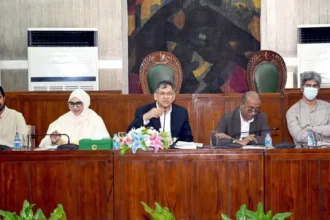
The results of the second phase of the firm’s second-round survey titled ‘Public’s Election Thoughts’ were released on Wednesday at a press conference at the National Archives Building auditorium in Agargaon, Dhaka. Rubaiyat Sarwar, Managing Director of Innovision Consulting, presented the findings. The discussion was attended by Professor Asif M Shahana of the Development Studies Department at Dhaka University and Fahim Mashroor, Co-Coordinator of Voice for Reform, among others.
The survey, which polled 10,413 participants across 521 Primary Sampling Units in 64 districts (69.5% urban, 30.5% rural), focused on voter intentions and key public demands.
Key Findings on Party Support
Among participants who had decided on their vote, the findings indicate:
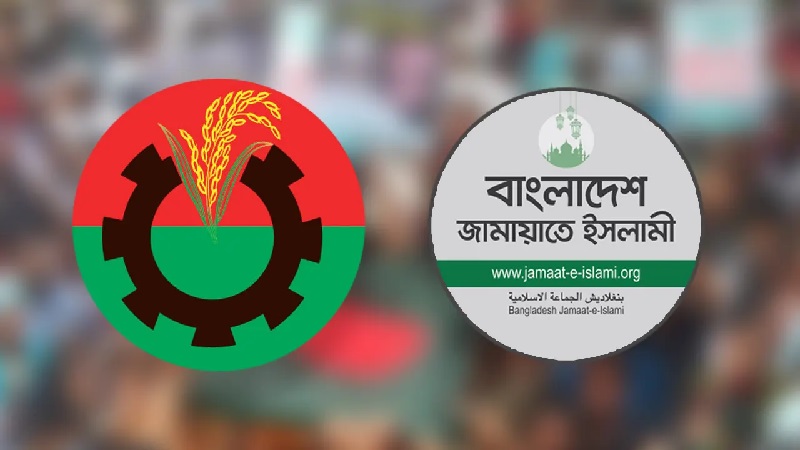
- Bangladesh Nationalist Party (BNP): Supported by 41.3% for forming the next government.
- Jamaat-e-Islami: Supported by 30.3% for forming the next government.
Support for the currently banned Awami League, however, saw a slight increase from the previous survey, rising from 14% to 18.8%. Conversely, support for the National Citizen Party (NCP) and Islami Andolon decreased to 4.1% and 3.1%, respectively.
Hypothetical Scenario
The survey also considered a hypothetical situation where the Awami League does not participate in the election. In this scenario, support levels are projected to increase:
- BNP Support: Rises to 45.6%.
- Jamaat Support: Rises to 33.5%.
The survey data suggests that support for the BNP increases with age but decreases with higher educational qualification. In contrast, Jamaat-e-Islami and the NCP show relatively greater popularity among younger and more educated voters.
Views on Awami League Participation
Participants were also asked about the participation of the Awami League, which is described as a currently banned party in the text. The responses were divided:
- 45.79% of participants believe the party should be given an opportunity to contest the election.
- 45.58% believe the party should face trial before being allowed to participate.
Shifting Public Demands
The survey noted a slight decrease in the voter decision-making rate (from 62% to 57.8%) compared to the first phase. However, the willingness of those who have decided to disclose their preference increased significantly (from 65.7% to 83.2%).
The public’s top priorities for the future government have also shifted:
- While controlling the price of daily essentials remains a major concern (54.6%), the primary public demand is now improving the law and order situation (57.5%).
- Other priorities include reducing corruption (36.9%) and reforming law enforcement agencies (20.3%).