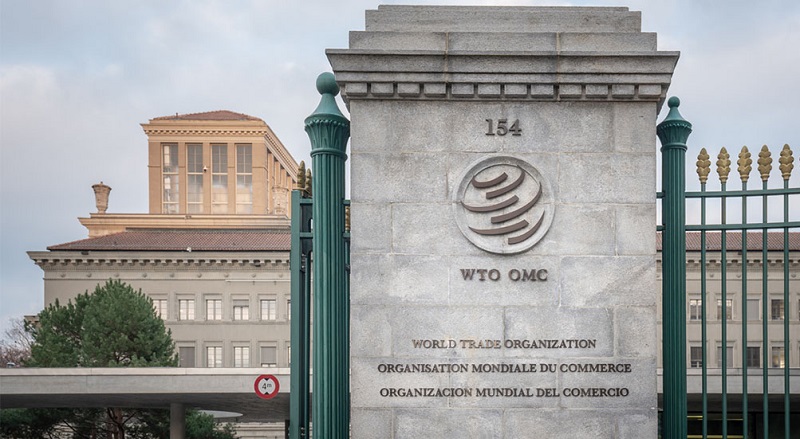
GENEVA – Artificial intelligence (AI) has the potential to boost the value of global trade in goods and services by nearly 40% by 2040, according to a new report from the World Trade Organization (WTO). This significant growth is projected to be driven by AI’s ability to reduce trade costs, increase productivity, and expand global market participation.
The report, titled “Working on Trade and AI for Everyone’s Benefit,” was released on Wednesday and highlights that the development and application of AI will also lead to substantial growth in global GDP, ranging from 12% to 13% under various scenarios.
Speaking at the report’s launch event in Geneva, WTO Director-General Ngozi Okonjo-Iweala stated that AI is already reshaping our economies and societies. “AI has the capacity to transform how we produce, consume, and trade,” she said.
Key Findings on AI’s Impact on Trade
The Director-General emphasized that AI’s contribution to trade growth is crucial, largely due to its ability to lower trade costs and reconfigure the production of goods and services. WTO simulations suggest that by 2040, AI could increase exports of goods and services by approximately 40% compared to current trends. A key finding from the research is that the private sector is already seeing real, trade-related benefits from using AI.
According to the report, around 90% of companies using AI have improved efficiency in managing trade risks or complying with procedures. However, the benefits of AI will not be automatically distributed evenly across economies. The simulations showed that low-income economies, even with some digital infrastructure and AI adoption, might see only about 8% growth from AI, whereas high-income countries could achieve double-digit growth.
The report stresses that if the digital and AI divide were narrowed, the GDP of low-income economies could almost double to 15%, without significantly changing the growth potential for high-income economies. This suggests that inclusive and equitable gains are possible, but they require deliberate action.
Challenges and Policy Recommendations
During a press briefing before the official report release, WTO Deputy Director-General Johanna Hill and report coordinators discussed the report’s key features. Hill noted that trade policy uncertainty is one of the most disruptive forces in the global trade environment, putting pressure on business confidence, investment, and supply chains. She called this a “testing time for the multilateral trading system.”
Hill added that the trade landscape is changing rapidly, with geopolitics and geo-economics taking center stage. “We are facing a variety of trends that are reshaping the future of the global economy and international trade. AI is definitely one of them,” she said.
The report projects that, based on different policy and technological factors between low- and high-income economies, global trade is expected to grow by 34% to 37% by 2040. It also highlights that trade can help economies access AI-enabled goods like semiconductors and other intermediate inputs. In 2023, global trade in these products reached a total of $2.3 trillion.
For AI and trade to contribute to inclusive growth, policies must be enacted to bridge the digital divide, invest in workforce skills, and maintain an open and predictable trading environment. The impact of AI on inclusive growth will depend on the planning of trade and trade-related policies. The report also calls for closer cooperation between the WTO and other international organizations to support greater global participation in an AI-driven economy, considering complementary policies in areas such as infrastructure, energy, education, and government support.